Opt Out Guides
PeopleSearch Opt Out Guide
Before You Opt Out of PeopleSearch, Check Your Exposure
Privacy Writer
A. J. MercerAva J. Mercer
Updated
Read
5 min
Before You Opt Out of PeopleSearch, Check Your Exposure
This people-search site can display personal information online. This includes your name, address, and phone numbers, which can raise privacy risks and make it easier for someone to steal your identity. It generally compiles personal information using public records and commercial sources. Then, PeopleSearch shows it in search results, so your personal details may be easier to find than you expect.
How to opt out of PeopleSearch
Use the online form, enter identifiers, complete verification, and confirm by link or code. This opt-out process is simple, but you may need to opt out later if listings change; if you need to search again, repeat the opt-out procedure.
Checklist:
- Search for your record
- Paste the profile URL into the form
- Complete CAPTCHA/verification
- Confirm via code/link
- Save the confirmation email
- Set a reminder to re-opt out
Find out if your private details were exposed
PeopleSearch – Quick Facts
| Parameter | Value |
| Domain | peoplesearch.com |
| Data Types | contacts, addresses, possible social identifiers, relatives, public records |
| Opt-out Methods | web form/email |
| Identity Verification | confirmation email or code |
| Typical Response Time | 3–7 days |
| Re-listing Risk | medium |
This people-search website organizes consumer records in a searchable database. It may use information from public records and other sources, and some data broker firms collect and sell personal data in similar directory products.
Common data you may find:
- Names and known aliases
- Phone numbers
- Email addresses
- Current and past addresses
- Date of birth
- Relatives and household links
- Property and real-estate records
- Court records
- Arrest records
- Criminal records
Step-by-Step Guide
Search for your record and copy the profile URL
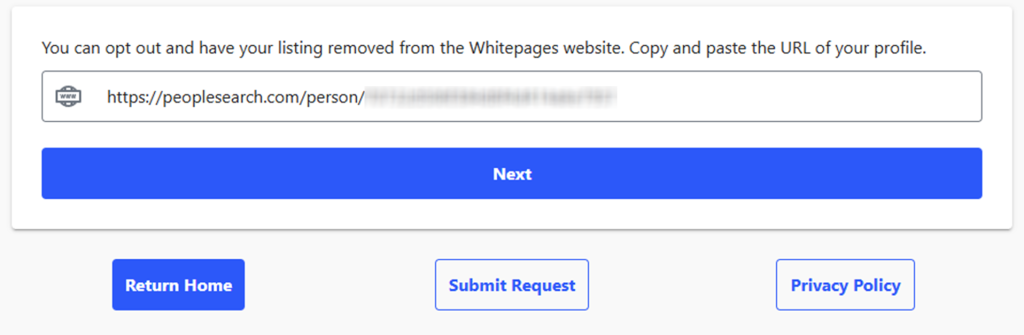
Use the search box to search for your name, then open the matching profile page and find your listing. If you see many similar names, compare locations and relatives. Copy the full profile URL from the address bar so you can remove your personal information later. If you save screenshots, blur personal info first. Tip: Clear old online accounts and delete autofill entries before you start.
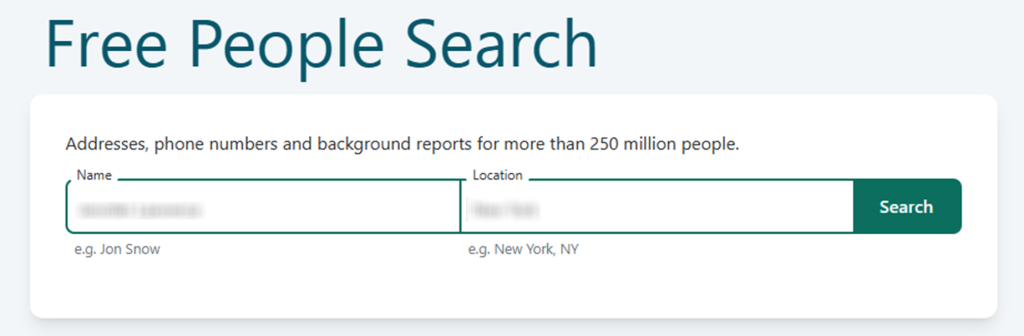
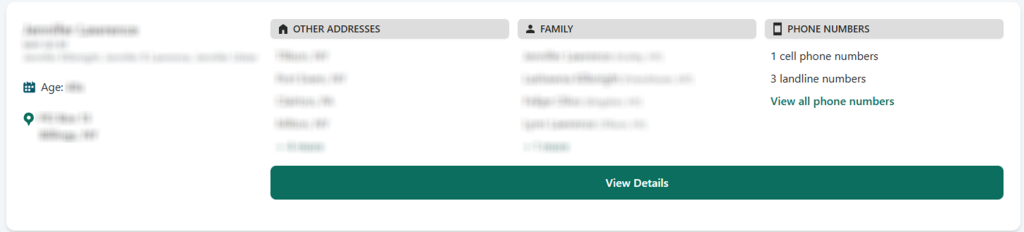
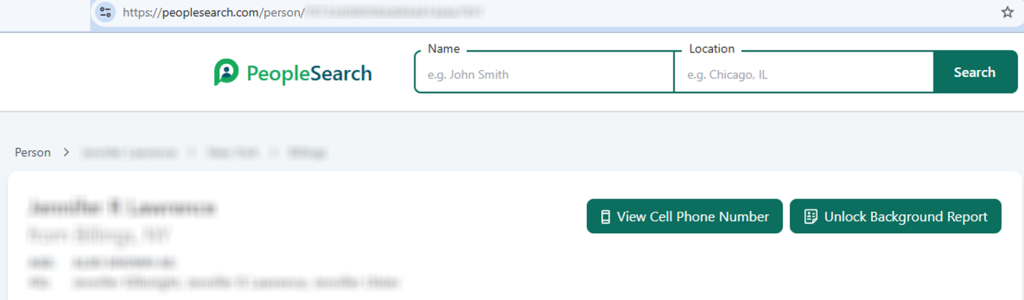
Open the privacy page and paste your profile URL
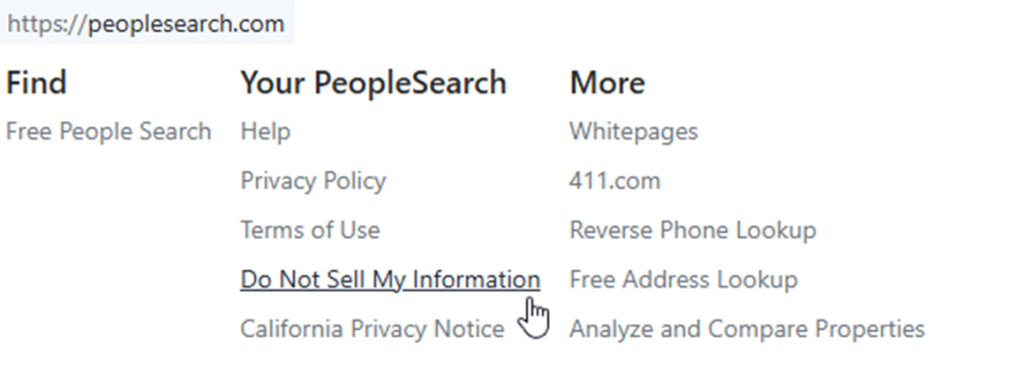
Scroll to the footer, open the privacy page, and choose the removal option. Paste the copied URL into the removal form. This is where you request removal, so double-check the link is correct before you submit. If you capture proof for support, redact personal information in any image. Tip: On mobile, open the menu to reach footer links more easily.
Choose the removal request reason
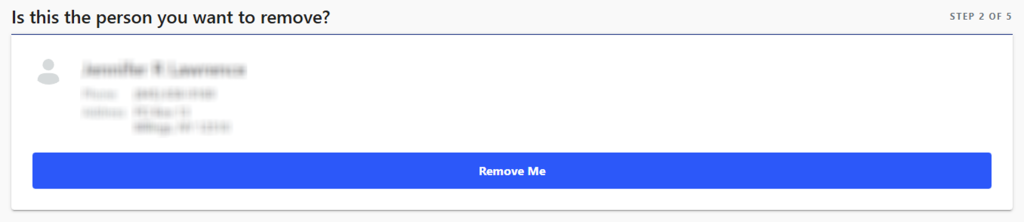
Pick a reason in the dropdown and keep any notes short. If there is a checkbox confirming you are the subject of the listing, tick it before continuing. Then click the main Submit/Next button to send your request. Some pages mention suppression, meaning the listing is hidden from public view. Tip: Save the confirmation screen as a record and write down the date you sent it.
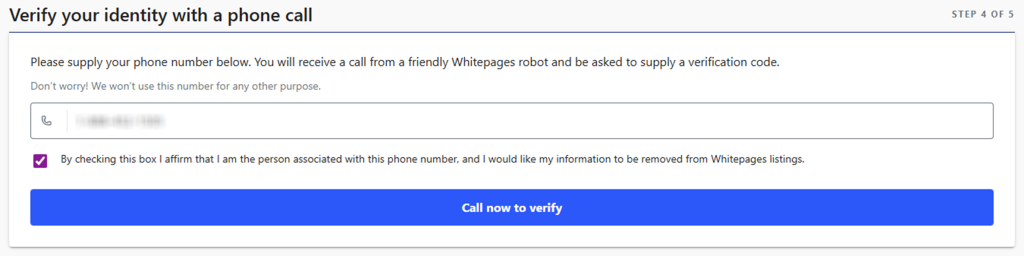
Confirm deletion via code
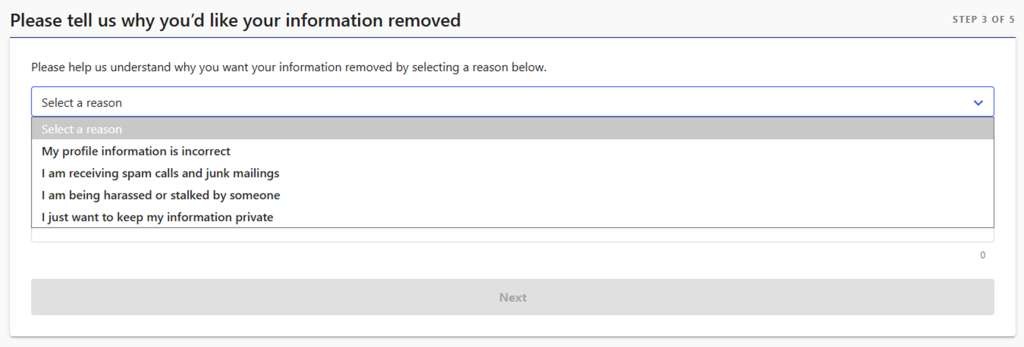
Look for the confirmation message. Enter the code shown on the page carefully. If nothing arrives, check the Spam folder and resend once. Make sure you are using the same contact method you entered. Wait a few minutes between retries. This step is the key verification that helps prevent someone else from trying to remove your information. Tip: Keep the confirmation message so you can complete your request quickly if the listing changes later.
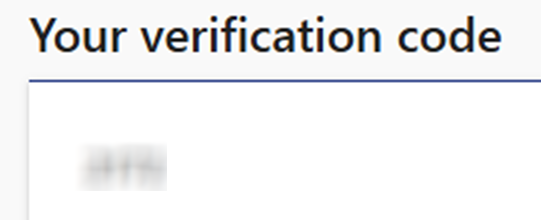
Track confirmation & timeline
Save the confirmation message and note the date you submitted. Most sites will send a final status update, but information may take time to clear from Google search results and other search engines. If the page still shows after 7 days, submit removal requests once more or contact support from the privacy page. Keep your opt-out request details for reference. Also, save the profile URL you used. Follow these steps to find sensitive data and learn how to remove your information from people-search sites like PeopleSearch. Tip: Set alerts for your name so you notice new listings sooner.
Timelines, Verification & What to Expect
After you submit, the typical response time is often 3–7 days, though it can vary by volume and routing. You may see an on-page confirmation right away. Alternatively, you may get a message that asks you to confirm that you control the email or phone used. If you get no response after 7 days, check the privacy/help contact. Then, resubmit once using the same URL and identifiers. If you receive an error or the page says the record was already processed, wait 24 hours and try once more.
Edge Cases & Troubleshooting
- No access to the original email/phone: use a current contact method you control, or ask support for an alternate path.
- “Record not found”: broaden the search, try an alias, or confirm you copied the right URL.
- CAPTCHA or submission errors: refresh, switch browsers, and try again.
- Code not arriving: wait 10 minutes, check junk folders, and resend once.
- Form rejects the request by region (EU/UK/CA): ask the support what opt-out options apply in your country.
- Account deletion vs. public listing removal confusion: cancel is separate from listing removal.
- Re-submitting after a failed attempt: verify the URL and try the request again.
Will my data reappear?
Listings can show up again when sites collect updates from aggregators, partner feeds, or resellers, or when public records change. Check other people search sites; information from people search websites can circulate, and data from data broker sites may also surface on a data broker website. Consider using alerts or using a privacy service like a dashboard (highly recommend using it if you want recurring checks).
Manual vs Assisted Removal
Manual:
Pros
- More control and a clear digital footprint trail;
- easier to remove your information on your schedule and protect your privacy.
Cons
- Time investment, repeat monitoring, and more chances for inaccurate information.
Assisted:
Pros
- A removal service can handle removal requests on your behalf with tracking and recurring checks;
- often faster with a dashboard.
Cons
- You may still need to confirm by email or code.
We remove your data for you - faster, verified, trackable.
Discover Which Sites Share Your Private Details—Instantly and Free.
FAQ
It’s a people-search site that may show personal information. This can expose personal information and increase unwanted contact.
Repeat the same steps for each profile URL. Save each confirmation message, and use those notes to remove your information again if new profiles appear.
Try a city or state, then an alias. If you still can’t find a match, double-check spelling and try later.
It’s a simple check, so another person can’t submit a request for you. This reduces mistakes and helps remove your information from the correct page.
Some profiles may reference legal records like court entries. You can still ask for removal, but results depend on the site’s process.
It often takes 3–7 days. If nothing changes after 7 days, resubmit once and contact support.
Tighten your account settings, and review major people search websites a few times a year.
Many data broker products share or re-list similar records. For broader coverage, try data removal tools.
The exposure of addresses and phone numbers can make it easier for criminals, and some people use exposed details for identity theft attempts.
Start with the steps to remove your information here, then repeat on other sites; removing your personal data is easier if you keep confirmations.

Posted by Ava J. Mercer
More People Search Removal Guides
- 411.com Opt Out Guide
- Absolute People Search Opt Out Guide
- Advanced People Search Opt Out Guide
- AnyWho Opt Out Guide
- BeenVerified Opt Out Guide
- CheckPeople Opt Out Guide
- CheckSecrets Opt Out Guide
- CocoFinder Opt Out Guide
- ContactOut Opt Out Guide
- DOBsearch Opt Out Guide
- FamilyTreeNow Opt Out Guide
- FastBackgroundCheck Opt Out Guide
- Find People Fast Opt Out Guide
- FindPeopleSearch Opt Out Guide
- FreePeopleDirectory: Opt Out Guide
- FreePeopleSearch Opt Out Guide
- GladIKnow Opt Out Guide
- GoLookUp Opt Out Guide
- IDCrawl Opt Out Guide
- Information.com Opt Out Guide
- Inforver Opt Out Guide
- Instant Checkmate Opt Out Guide
- InstantPeopleFinder Opt Out Guide
- Kiwi Searches Opt Out Guide
- MyLife Opt Out Guide
- Nuwber Opt Out Guide
- OfficialUSA Opt Out Guide
- PeekYou Opt Out Guide
- PeopleByName Opt Out Guide
- PeopleFinder Opt Out Guide
- PeopleFinders Opt Out Guide
- PeopleLooker Opt Out Guide
- PeopleLookup Opt Out Guide
- PeopleSearch Opt Out Guide
- PeopleSearchNow Opt Out Guide
- PeopleSmart Opt Out Guide
- PeopleWhiz Opt Out Guide
- PersonSearchers Opt Out Guide
- Persopo Opt Out Guide
- PrivateEye Opt Out Guide
- PrivateRecords Opt Out Guide
- Public Data Check Opt Out Guide
- Public Data USA Opt Out Guide
- Public Records 360 Opt Out Guide
- PublicRecordsNow Opt Out Guide
- Quick People Trace Opt Out Guide
- Radaris Opt Out Guide
- RealPeopleSearch Opt Out Guide
- SearchPeopleFREE Opt Out Guide
- SearchUSAPeople Opt Out Guide
- Semcasting Opt Out Guide
- Social Catfish Opt Out Guide
- Spokeo Opt Out Guide
- ThatsThem Opt Out Guide
- TruePeopleSearch Opt Out Guide
- TruthFinder Opt Out Guide
- UnMask Opt Out Guide
- US Search Opt Out Guide
- USA People Search Opt Out Guide
- USATrace Opt Out Guide
- Veripages Opt Out Guide
- Whitepages Opt Out Guide
- Wyty Opt Out Guide
- ZabaSearch Opt Out Guide