Opt Out Guides
Allant Group Opt Out Guide
Privacy Writer
A. J. MercerAva J. Mercer
Updated
Read
5 min

If your name, contact information, and telephone number show up on a website, you face higher risks of spam, telemarketing, and misuse. Allant Group operates a marketing platform and may appear in a data broker directory; listings can originate from public records and commercial sources. This guide shows you exactly how to opt out: where to go, what to submit, and how to confirm with a code or link. You’ll get quick steps, screenshots, official privacy policy resources, and realistic timelines. We also explain verification, deletion, and suppression, how to monitor for re-listing, and how to update a submission if anything changes. Keep your email handy, verify promptly via electronic messages, and adhere to the process to enhance your privacy.
How to opt out of Allant Group
Go to the official privacy policy page on the company website, submit your email and phone, and confirm via a verification code or link. Typical processing takes 3–10 days, though timelines can vary by request type and residence. Save the confirmation letter for compliance and future resubmission.
Checklist:
- Open the official opt-out form
- Enter identifiers (email/phone)
- Complete CAPTCHA/verification
- Confirm via code/link
- Save the confirmation letter
- Set a reminder to re-opt-out
Find out if your private details were exposed

2,865,794 have already used our service
Allant Group – Quick Facts
| Parameter | Value |
| Domain | allantgroup.com |
| Data Types | Contacts, addresses, identifiers, audience attributes |
| Opt-out Methods | Web form/email/mail |
| Identity Verification | Code via email/SMS or confirmation letter |
| Typical Response Time | 3–10 days |
| Re-listing Risk | Medium |
About Allant Group
Allant Group is an audience management provider and marketing platform that helps brands utilize consumer data for marketing campaigns. Information can be derived from public records, client feeds, and commercial sources. The privacy policy explains how services may process data and how to submit a request by email, mail, or web form in line with applicable laws; some policies reference licensing or lease concepts in industry contexts.
Common data you may find:
- Names and known aliases
- Email addresses
- Phone numbers
- Current and past addresses
- Age range or year of birth (if available)
- Household or relative links
- Property references (where available)
- Professional or social profile links (if available)
- Audience attributes and usage notes
- Preference/suppression status after deletion
Step-by-Step Guide
Open the official opt-out form
Go to the Allant Group website footer. Look for a “Privacy Request Portal” or opt-out mechanism button. Confirm you’re on the official website before you submit anything. If the page references the National Do Not Call registry for direct mail and telemarketing preferences, note those options. Keep your browser updated and enable cookies to protect accuracy and reduce form errors. Acknowledge any terms of use or terms and conditions shown.

Submit your identifiers (email/phone + CAPTCHA)
Enter your name, email address, and telephone number in the required fields. Provide only the personal information needed for identity matching. Complete any CAPTCHA challenge, then submit. Strictly limit entries to what the form requests, and maintain a strict record of what you shared. For administrative tracking, save a local file with the date/time. Do not reproduce screenshots publicly; blur sensitive details.
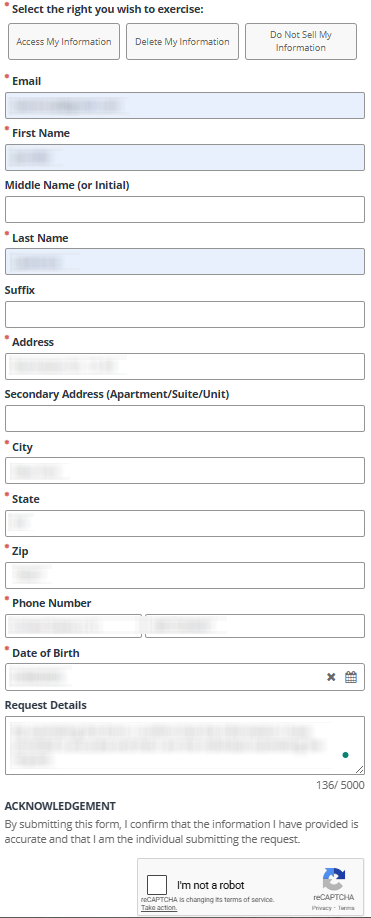
Verify via code or link (email/SMS)
Watch for a message with a verification code or link. Check Spam and Promotions folders, and try mobile if needed. If nothing arrives, resend once. Download the confirmation letter to maintain records and comply with future submission needs; an authorized agent acting on your behalf may need proof if involved.
Confirm deletion / Do-Not-Sell request
After verification, choose the appropriate option: deletion, do-not-sell/share, or access. If you want the record removed entirely, select delete when available. Review any limitation notes describing suppression databases to retain proof of your opt-out while preventing future usage, including personal information. You may see references to third-party processing, third-party service providers, or party data flows – this is typical for request handling. Confirm the request and save a screenshot for compliance.
Track confirmation & timeline
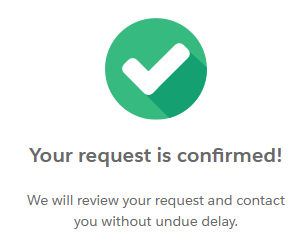
Expect on-page confirmation acknowledging your request. Typical response is 3–10 days under applicable laws. Monitor status and set a reminder to review annually, then update if your details change. If a breach notice or security alert ever appears, review for unauthorized access and notify support. Keep case numbers organized; if you decide to cancel a prior submission, follow the contact path listed in the policy.
Timelines, Verification & What to Expect
Most requests are completed in about 3–10 days. You’ll usually see on-page confirmation first, then an email confirming receipt and action. If verification is required, a link is delivered. If you see no response by day 10, contact the route in the privacy policy and resubmit once. Records may move into a suppression status to retain proof of your opt-out while preventing future usage. Keep confirmations and any ticket numbers to comply with future requests. Processing occurs in accordance with applicable laws. Some regions may involve extra steps, especially for automotive audiences or niche segments.
Edge Cases & Troubleshooting
- No access to the original email/phone: use the portal’s alternate contact path or telephone; provide minimal documentation if asked.
- “Record not found”: submit again with prior addresses or an alternate email address.
- CAPTCHA or submission errors: refresh the website, switch browser, or try mobile.
- Verification code not arriving: resend once, check Spam, then contact support.
- Region limits (EU/UK/CA): use the email or mail options mentioned in the policy.
- Account deletion vs. listing removal: pick deletion, do-not-sell/share, or access as needed.
- Re-submitting after a failed attempt: wait briefly, then submit again and reference any prior file or case number.
Will my data reappear?
Re-listing can occur when aggregators, partners, or service providers refresh imports from public and commercial sources, or when indirect feeds repopulate a database. Suppression helps, but it isn’t a universal solution across every platform. Reduce recurrence by saving confirmation letters, setting a 3–6 month reminder, and re-submitting quickly if needed. Monitor your name on the website and related services, including any automotive-facing datasets and marketing tools. In some ecosystems, resellers may refresh via licensing or lease arrangements, so re-check periodically.
Related removals
- Spokeo
- Acxiom
- Oracle Advertising
- Epsilon
- Experian Marketing Services
- Intelius
- BeenVerified
- Whitepages
Manual vs Assisted Removal
Manual:
- Pros: Free, strong control over what you submit, and you directly manage repeat monitoring.
- Cons: Time investment, you must track request frequency and ensure compliance yourself, and you’ll handle follow-ups.
Assisted:
- Pros: Faster workflows, verification help, tracking dashboard, recurring checks, and documentation management.
- Cons: Possible payment, less direct control, and reliance on a provider under a contractual agreement.
“Excellent”
We remove your data for you - faster, verified, trackable.
Discover Which Sites Share Your Private Details—Instantly and Free.
2,865,794 have already used our service
FAQ
Receive expert privacy advice by email - 1-2 times per month, no fluff.
Share Article

Posted by Ava J. Mercer
Ava J. Mercer is a privacy writer at ClearNym focused on data privacy, data broker exposure, and practical privacy tips. Her opt-out guides are built on manual verification: Ava re-tests broker opt-out processes on live sites, confirms requirements and confirmation outcomes, and updates guidance when something changes. She writes with a simple goal - help readers take the next right step to reduce unwanted exposure and feel more in control of their personal data.
76 Articles